A couple of years back, I instructed a short express first aid course at a local sporting activities club. 2 weeks later, the club manager rang me, his voice shaking. A player had fallen down with unexpected cardiac arrest throughout a social video game. Among the moms and dads, that had simply ended up an express cpr course, began compressions while another got the club's defibrillator. Paramedics later on stated those first 3 mins most likely made the difference in between a funeral service and a full recovery.

That is the peaceful power of fast first aid training. It does not make headings, however it transforms outcomes, one incident at a time.
This sort of fast, focused training is no longer a high-end. It is among the most functional methods a neighborhood can safeguard itself, specifically when people are hectic, workplace rosters are limited, and volunteers are hard to discover. The secret is to match the rate of the course with the depth of skills that really matter when something goes wrong.
Why "fast" training functions when it is done properly
People often hear "fast first aid course" and presume "cut down" or "shortcut". In my experience, the very best fast first aid courses are not shortcuts in all. They are firmly designed programs that strip away fluff and focus on the tiny collection of actions that change outcomes.
Most emergency situations adhere to a comparable pattern. There is a quick home window where a few straightforward actions maintain a poor circumstance from getting a lot worse. Fast first aid training concentrates on those early minutes: inspecting threat, calling for aid, beginning cpr training if required, and regulating major bleeding. When you exercise these foundations, even for a couple of focused hours, you build useful self-confidence that rollovers to actual life.
A full day first aid and cpr course has its place, particularly for work environments with greater danger or for marked first aid officers. However most of people in an area do not require to understand every niche situation. They require to understand exactly how to:
Recognise a life threatening emergency. Start reliable first aid and cpr within the very first minute or two. Use readily available devices, like a defibrillator, without freezing.A fast first aid course that is well structured can achieve those 3 goals remarkably well.
What in fact transforms when more individuals know first aid
Statistics can feel abstract, but the system is simple. When much more spectators have even standard first aid training, three things change in a community.
First, the "dead time" in between collapse and effective treatment diminishes. In heart attack, for example, every minute without cpr lowers the possibility of survival by approximately 7 to 10 percent. Fast cpr courses are basically an area level intervention versus those shed minutes.
Second, the top quality of first aid improves. It is not enough that someone does "something". Poor compressions, first aid training facilities near me incorrect airway positioning, or unneeded moving of a harmed individual can limit the advantage or develop brand-new problems. Also a short express first aid training session can fix typical misconceptions, such as slapping a person having a seizure or putting something in their mouth.
Third, people who have trained when come to be supporters. I have seen moms and dads that finished an express child care first aid course take place to press their school to mount a computerized exterior defibrillator, or small company owners that upgrade their first aid packages and motivate their personnel into fast first aid courses. The training splashes outward.
The actual distinction in between fast, express, and complete length courses
Course names differ by company, however in technique there is a spectrum.
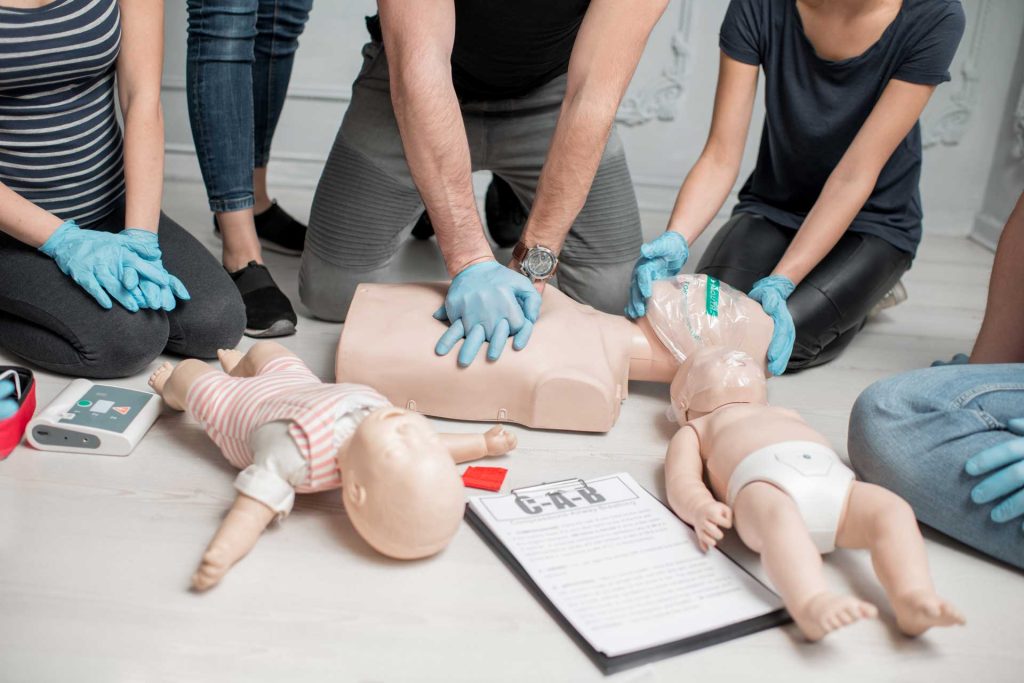
At one end, you have express first aid certification programs first aid courses. These commonly competed 2 to 4 hours. They focus on a narrow but crucial capability: standard life assistance, cpr, choking, hemorrhaging control, and how to trigger emergency solutions swiftly and successfully. An express first aid course can suit community groups, busy parents, or volunteers who require the essentials under a limited time budget.
In the middle, you discover fast first aid training that still leads to a nationally recognised first aid certificate. These courses may integrate some pre course online theory with a shorter face to face functional session. There could be a "fast first aid course near me" that uses e discovering modules for the expertise element, so the classroom time is made use of virtually completely for hands on method. For numerous workplaces, this mixed format has ended up being the pleasant spot.
On the back rest full day, or perhaps multi day, first aid courses. These first aid and cpr courses cover a wide series of topics, from ecological emergencies to much more complicated clinical conditions. They are vital for high duty functions, such as workplace first aid officers, remote area workers, or specialist carers.
Alongside general first aid courses, there are specialisations:
- Fast cpr courses and fast cpr correspondence course alternatives that concentrate only on resuscitation abilities, frequently in 1 to 2 hours, suitable for yearly updates. Express child care first aid course programs, developed around children and babies, including choking, asthma, anaphylaxis, and fever relevant emergencies. Targeted first aid and cpr training classes for particular sectors, such as building, friendliness, or physical fitness, where the threat profiles differ.
The important question is not whether a course is called "fast" or "express", but what outcomes it guarantees and exactly how it evaluates competence.
What you can realistically find out in a fast first aid course
I have actually seen individuals walk into a short first aid training session with uncertainties, then leave shocked by just how much they can do. If the course is developed well, you must have the ability to walk out confident in at the very least these areas.
You ought to understand exactly how to look for threat, feedback, respiratory tract, breathing, and circulation without obtaining shed in details. You should be able to recognise when a person is not taking a check here breath generally and begin cpr with company, fast compressions in the facility of the chest. If an automatic external defibrillator is offered, you should really feel able to turn it on and adhere to the prompts without worry of "doing it wrong".
You should understand the essentials of choking in adults, children, and infants. That consists of encouraging coughing, applying back strikes, and using chest thrusts when necessary. You ought to know that for babies, the technique and placing differ, something express child care first aid training hangs around on.
You must exercise regulating major bleeding with straight pressure, basic bandaging, and improvised techniques when no package neighbors. There should be clear conversation on when to utilize a tourniquet and when straightforward stress is enough.
Beyond the physical abilities, you should learn exactly how to call for aid efficiently, how to pass on tasks to onlookers, and exactly how to handle your own tension in the first couple of minutes. Good trainers hang out on interaction and management as high as accessible positioning for compressions.
If a carrier is offering a fast certification that asserts to turn you into a professional on every feasible emergency situation in 90 mins, that is unrealistic. A concentrated fast first aid course that offers you strong basic life support skills, nonetheless, is extremely attainable because window.
The compromise of shorter courses
Shorter, quicker courses are eye-catching, however they do entail trade offs. It deserves being honest about them.
You cover much less breadth. A fast first aid course generally focuses on life risks. Less urgent, but still crucial, issues like minor wounds, strains, or environmental injuries may get just quick interest or autumn outside the curriculum.
There is less time for repeating. Muscular tissue memory comes from technique. A complete day first aid and cpr course might run numerous rounds of cpr drills, whereas a fast cpr course might only enable a couple of complete cycles each. The trainer has to manage timing thoroughly to ensure every individual gets real hands on time, not just seeing from the sidelines.
Individual responses is tighter. In a compressed session, the instructor might need to move swiftly in between individuals. This is where group dimension limits and seasoned instructors issue. A tiny team in a fast first aid course can obtain almost the exact same depth of feedback as a much longer session with a big group.
Online theory can create an incorrect complacency. Mixed courses that integrate self paced e finding out with face to face abilities evaluation work when people actually complete the pre job correctly. When they hurry via the modules just before class, their understanding may be surface. Responsible service providers build in quick understanding checks during the practical session to catch and deal with any gaps.
The key is to match the course layout to your demands. A moms and dad who simply wants to know how to deal with choking and fundamental cpr might genuinely favor an express cpr course, then repeat a fast cpr correspondence course annually. An office security officer, on the various other hand, ought to dedicate to a deeper first aid course with even more circumstances and assessment.
How rep and refreshers keep abilities alive
First aid abilities discolor. That is not an ethical failing, it is simply exactly how memory helps rarely used tasks. I have tested individuals one year after a first aid and cpr course and seen compression deepness, price, and hand placement deteriorate significantly.
Fast refresher courses are among the very best ways to respond to that all-natural degeneration. If your preliminary training was strong, a brief express cpr training session every 6 to 12 months can restore your technique swiftly. The exact same holds true for various other core skills like using a defibrillator or managing choking.
From a community point of view, it often works much better to have individuals complete an available fast first aid course at first, after that installed much shorter, regular refreshers. This version keeps skills closer to the surface area and values the truth of hectic timetables and shifting lineups. It also lowers the psychological barrier of "I do not have a complete day to give up", which is a typical factor individuals avoid first aid training altogether.
Some workplaces set up quarterly mini sessions, 20 to 30 minutes each, where staff cycle via cpr manikins and scenario conversations. Others reserve a yearly fast cpr refresher course for all staff, while assigning a smaller team to complete more comprehensive first aid and cpr courses every 3 years. The pattern matters much less than the consistency.
The diplomatic immunity for child care and youth settings
Whenever I educate early childhood educators or parents, the stress and anxieties are different. Individuals stress over small airways, allergic reactions, high temperatures, and the anxiety of "damaging" a kid with compressions.
Express childcare first aid courses exist permanently factor. Children and infants existing in different ways to adults. Anaphylaxis in a child, as an example, can relocate frighteningly fast. Asthma assaults might escalate throughout play or sport without much caution. Choking incidents are far more typical among kids than grownups, and the physics of their bodies need different techniques.
An express childcare first aid course normally focuses on:
- Infant and child cpr, consisting of secure compression depth and ratio. Choking in babies and young kids, with focus on placing and mild however efficient force. Asthma emergencies, consisting of inhaler and spacer use. Allergic responses and anaphylaxis, with technique using adrenaline injector training devices. Fever, seizures, and head injuries, consisting of warning indications that require urgent clinical review.
For childcare facilities, preschools, and schools, regular express child care first aid training is one of one of the most crucial safety and security financial investments they can make. It additionally soothes team and moms and dads. When instructors recognize they have practiced these particular situations, they rest a little easier.
Choosing a fast first aid or cpr course that actually prepares you
Not all first aid training is equivalent. If you are scrolling through search results for a "fast first aid course near me", you could see shiny pledges and discount rate offers. Look past the advertising and marketing and concentrate on a few core questions.
Who recognizes the provider, and does the course bring about an acknowledged first aid certificate where called for? For work environment compliance, your organisation might have lawful commitments that specify a certified supplier or particular units of competency.
How much hands on method is developed into the timetable? If a 2 hour cpr course is set up for 30 individuals with a solitary teacher, you will certainly not obtain the practice and comments you need. Most great cpr training programs limit team sizes or offer assistant trainers.
What is the background of the trainers? Experienced trainers, often with scientific or emergency action experience, bring nuance and genuine stories that pure theory fitness instructors do not have. They can clarify why guidelines transformed, share what in fact takes place during a 000 or 911 call, and assist you browse the messy truth where people panic or problems overlap.
How frequently does the service provider update their material? First aid standards alter as evidence advances. Cpr compression depth suggestions, use of oxygen, and management of anaphylaxis have actually all moved with time. A high quality carrier assesses the most up to date assistance from credible resuscitation councils and regulative bodies.
Is there a clear pathway for refreshers? Fast first aid courses radiate when they become part of an ongoing discovering strategy, not a one off tick box. Search for providers who use express cpr courses, fast cpr correspondence course options, or brief circumstance based sessions at sensible intervals.
Building a culture of first aid in your regional area
Individual training issues, however a genuinely secure community expands from culture. I have actually seen residential areas where nearly every sporting activities club, school, and small business has staff with current first aid and cpr training. Those are the areas where bystanders action in without hesitation.
If you want to enhance first aid capability where you live or function, a few methods often tend to function well.
First, normalise first aid training in social groups. When one parent recommends an express first aid course for the mommies group, uptake is commonly high. People feel extra comfortable learning together with good friends, and the shared experience urges them to maintain abilities current.
Second, link training to noticeable changes. After a fast first aid training session, review your local facilities. Are first aid packages stocked and accessible? Is there a defibrillator, and do individuals know where it is? Little, concrete improvements reinforce the value of what has been learned.
Third, reward first aid as a common responsibility instead of a specialist task. Instead of relying on a solitary "first aid person" at every occasion, aim for wide coverage. Even if a single person holds the key first aid certificate, others can complete much shorter express cpr training or fast first aid courses so they really feel able to assist.
Fourth, talk openly about near misses and successes. When someone uses their training, whether at the workplace, at sporting activity, or in the house, share the tale with their approval. These real experiences are extra persuasive than any type of brochure. They likewise assist others visualize themselves tipping forward.

What it seems like to use your training
People typically worry they will ice up or forget everything under stress. That fear is reasonable, and it is one reason excellent training issues. Technique does not turn you right into a robotic that steadly bears in mind every action, however it provides you a starting point.
One of my graduates, a young hospitality worker, described her initial actual emergency. A client had actually fallen down in the coffee shop. She stated her mind went blank for a minute, but her body began moving. She checked for reaction, shouted for someone to call an ambulance, and started compressions just as we had actually practiced. Just after paramedics took over did her hands start shaking.
That pattern prevails. In the minute, you may not recall every information of your first aid course. What lugs you is a few practiced habits: appearance, pay attention, feel, act. A fast first aid course that drills those routines correctly is worth even more than a lengthy course you hardly engaged with.
People in some cases apologise later, saying, "I do not think I did it completely." Perfection has actually never been the criterion. Starting is. Imperfect compressions are far better than none. A a little awkward healing setting is better than leaving somebody level on their back. Fast first aid has to do with moving the action from reluctance to action.
Making first aid training realistic and humane
Technical skills matter, yet so does the human side. A good first aid and cpr course, even a short one, need to prepare you for the psychological appearance of emergencies.
Emergencies are loud, untidy, and packed with competing voices. You may require to give guidelines to complete strangers, assure member of the family, or manage your very own anxiety of making points worse. In my classes, I encourage basic, clear language: "You, call an ambulance." "You, get the first aid package." This type of regulation communication feels abnormal initially, specifically in cultures that value politeness, however it prevents confusion.
There is additionally the results. Utilizing cpr on a coworker or stranger is a considerable psychological event. Many individuals feel unclear for days or weeks. Some replay the event in their minds, thinking of what they can have done in different ways. Comprehensive first aid courses sometimes review debriefing and assistance, but fast courses usually skip this.
If you have utilized your abilities, it is useful to chat with a person who comprehends, whether that is the trainer, a colleague, or a professional. Advise yourself that acting, also miserably, is a profound service. When neighborhoods promote fast first aid and cpr courses, they must additionally advertise a culture of take care of those that tip in.
Practical following steps
If you have actually reached this factor and are thinking, "I must most likely do something regarding this," then the most helpful action is really straightforward. Pick a realistic starting point and commit to it.
You could book an express cpr course this month, then set up a much longer first aid and cpr course later on in the year. You could speak with your college, sporting activities club, or office about bringing in express first aid courses or express childcare first aid courses for your group. You might be the individual who suggests a yearly fast cpr refresher course as part of your organisation's safety routine.
Whatever path you pick, aim for training that:
- Gives you purposeful, hands on practice. Focuses on the initial couple of minutes of real emergencies. Connects you with a network of others that share the responsibility.
A fast first aid course is not simply a line on a resume or a workplace demand. It is a silent promise you make to individuals around you. When something fails, you will certainly not stand back and enjoy. You will recognize the fundamentals, you will begin, which may be all that is needed to keep someone alive up until aid arrives.